
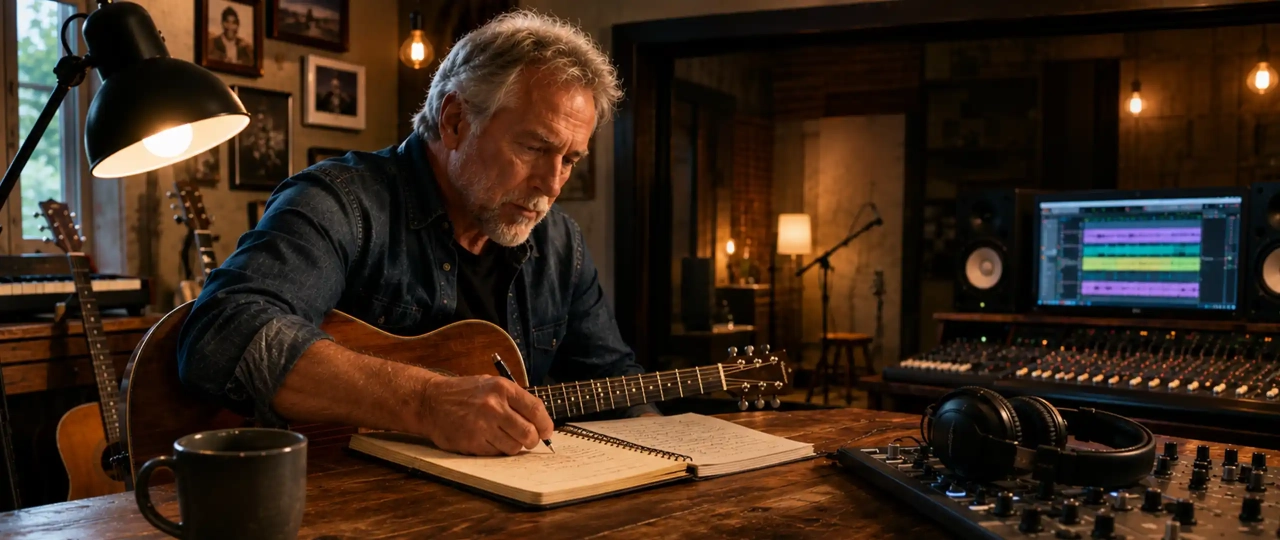
After more than four decades as a songwriter, musician, recording engineer and producer, I have learned that songs can begin in many different ways. There is no single formula. Sometimes the best songs arrive unexpectedly.
It Often Starts with an Idea
Other times, the melody comes first.You might be driving, walking or sitting with a guitar when a tune suddenly appears in your head. If it feels interesting, record it quickly on your phone or make a rough note. Ideas can disappear just as quickly as they arrive.
I have always believed that if an idea comes to you, capture it. It doesn't have to be good enough yet. It just has to be saved.
Finding the Heart of the Song
This is where songwriting becomes personal. The strongest songs often have something genuine at their center. They don't necessarily need complicated lyrics or clever words. Sometimes a simple thought, honestly expressed, can be far more powerful.
I often ask myself: What am I really trying to say? Once that becomes clear, the rest of the song has somewhere to go.
Melody, Chords and Structure
Sometimes the structure comes naturally. Other times it takes considerable work. A song may go through several versions before you find the arrangement that feels right. And that's perfectly normal.
Songwriting isn't always about getting everything right on the first attempt. Sometimes you have to try something, listen to it, decide that it isn't working and start again.
The Rough Demo
The purpose of the demo is to hear the song outside your head. You may discover that the chorus isn't strong enough, that a verse is too long, or that the song needs a different tempo.
This is an important stage because it is much easier to change the arrangement before you begin the final recording.
Bringing the Song into the Studio
Is it an intimate acoustic ballad? A country song? An Irish folk song? A full band production? Something simple and traditional, or something more ontemporary?
The answer influences everything that follows — instruments, tempo, arrangement, vocal style and production. As a producer, I believe the recording should serve the song rather than overwhelm it.
A great arrangement can enhance a song, but too many instruments can sometimes hide what made the song special in the first place.
Recording the Vocal
Sometimes the technically perfect take isn't the best take. A slightly imperfect performance with genuine feeling can communicate much more than a flawless performance that sounds lifeless.
That is why creating a relaxed recording environment is so important. The singer needs to feel comfortable enough to concentrate on the meaning of the song rather than worrying about every little mistake.
Building the Arrangement
This is where experience becomes important. The question isn't “What else can we put on the track?” The better question is: “What does this song need?” Sometimes the answer is very little. Other songs need a much bigger arrangement to bring them to life.
Mixing and Mastering
Finally comes mastering — the final stage of preparing the finished recording for listening and distribution. At this point, the little idea that started with a lyric, melody or chord progression has become a complete recording.
From an Idea to Something Real
One of the things I still enjoy most about recording is hearing that transformation happen. A songwriter can arrive with nothing more than a few handwritten lyrics and a melody in their head.
A few hours, days or weeks later, there can be a finished recording sitting in front of them. That is a remarkable process. And it is worth remembering that every finished song began somewhere. Behind every recording is an idea.
It may have started in a bedroom, a kitchen, a car, a pub, a rehearsal room or simply as a tune running through somebody's head. The important thing is to capture it, develop it and give it a chance to become something more.
Because a song doesn't become a recording all at once. It begins with an idea — and then, step by step, it comes to life.